
Emotional Journey Mapping for Activations
Learn to map the emotional journey of brand activations. Create experiences that guide visitors through intentional emotional arcs for maximum impact.
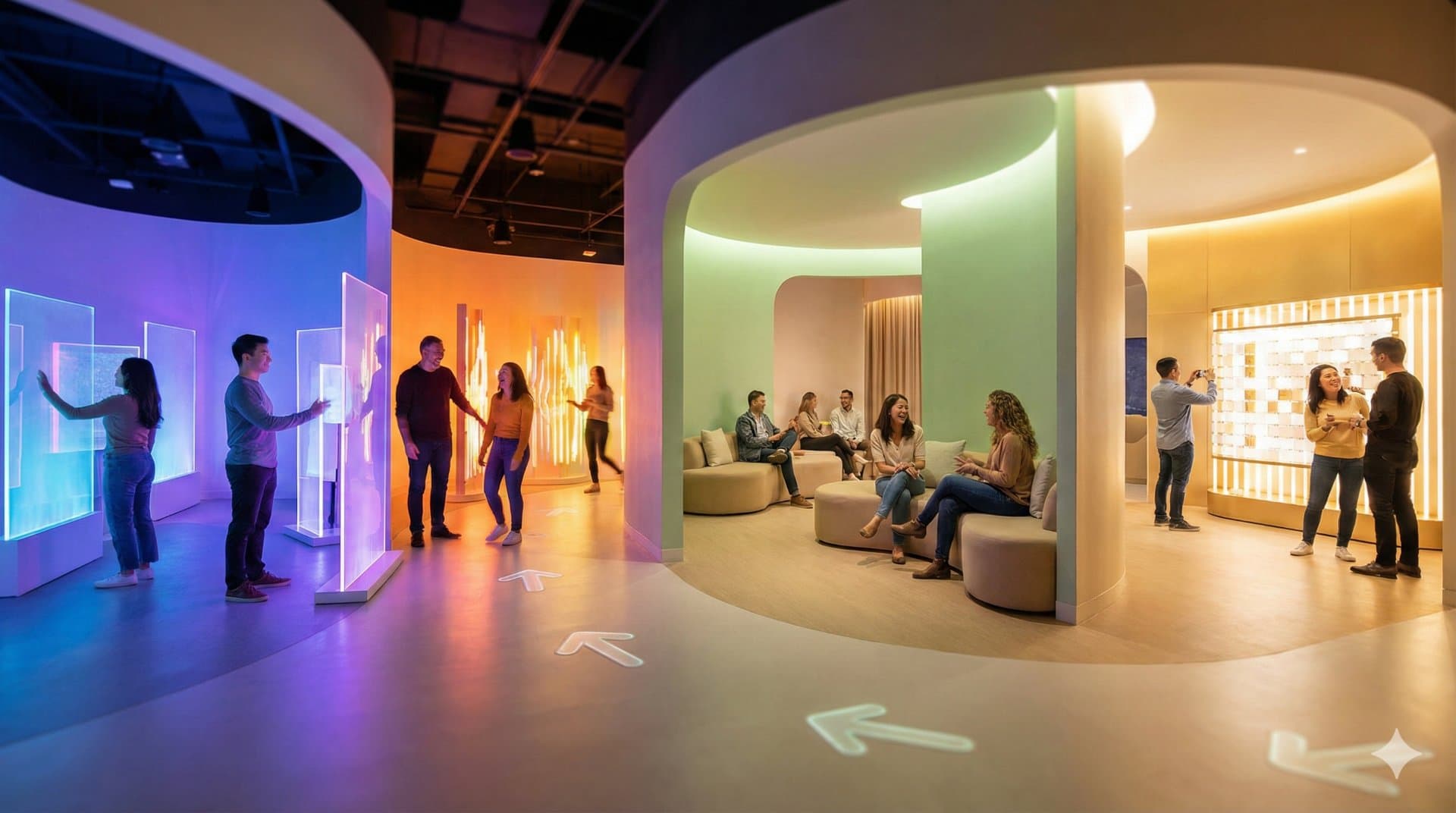
Charting the Emotional Path
Every brand activation takes visitors on a journey, not just through physical space, but through emotional states. Emotional journey mapping makes this journey visible and designable, enabling intentional creation of emotional experiences.
What Is Emotional Journey Mapping?
Emotional journey mapping is the practice of visualizing and designing the emotional states visitors experience throughout an activation. It goes beyond traditional journey mapping by focusing specifically on feelings at each stage.
Traditional Journey Map Focus:
- Touchpoints and interactions
- Actions and behaviors
- Pain points and opportunities
- Functional needs
Emotional Journey Map Focus:
- Emotional states at each stage
- Emotional transitions and triggers
- Peak emotional moments
- Emotional resolution
The Emotional Arc
Great stories follow emotional arcs, and so should great experiences. The classic narrative arc provides a framework:
1. Exposition (Setup) Establish the emotional baseline. Create context and set expectations. Target emotions: Curiosity, anticipation, comfort
2. Rising Action (Build) Gradually increase emotional intensity. Build engagement and investment. Target emotions: Interest, excitement, connection
3. Climax (Peak) The emotional high point. The moment visitors will remember most. Target emotions: Delight, amazement, joy, triumph
4. Falling Action (Resolution) Bring emotions down gently. Process and integrate the experience. Target emotions: Satisfaction, reflection, gratitude
5. Denouement (Conclusion) Leave visitors with positive final emotions. Create desire to return. Target emotions: Contentment, belonging, anticipation (for next time)
Creating an Emotional Journey Map
Step 1: Define the Journey Stages Break the activation into distinct stages:
- Pre-arrival (awareness, anticipation)
- Arrival (entry, orientation)
- Exploration (discovery, engagement)
- Core experience (main activities)
- Peak moment (highlight)
- Wind-down (transition)
- Departure (exit, farewell)
- Post-visit (memory, sharing)
Step 2: Identify Current Emotional States For each stage, document:
- What emotions do visitors currently feel?
- What triggers those emotions?
- How intense are the emotions?
- How consistent is the emotional experience?
Methods:
- Observation and shadowing
- In-experience feedback
- Post-visit interviews
- Facial expression analysis
- Social media sentiment
Step 3: Define Target Emotional States For each stage, specify:
- What emotions should visitors feel?
- How intense should emotions be?
- What emotional transitions are needed?
- What are the emotional priorities?
Step 4: Identify Gaps and Opportunities Compare current and target states:
- Where are emotions misaligned?
- Where are emotional opportunities untapped?
- Where are negative emotions occurring?
- Where could peak moments be stronger?
Step 5: Design Emotional Interventions Create specific design elements for each gap:
- Environmental changes
- Staff behaviors
- Content and messaging
- Sensory elements
- Surprise and delight moments
Step 6: Validate and Iterate Test the designed journey:
- Prototype and pilot
- Measure emotional response
- Gather feedback
- Refine and improve
Emotional Journey Map Components
Visual Format Create a visual representation including:
- Timeline or stage progression
- Emotional intensity graph (peaks and valleys)
- Specific emotions at each point
- Triggers and design elements
- Measurement points
Emotion Vocabulary Use specific emotion words, not just positive/negative:
- Curiosity, intrigue, wonder
- Excitement, anticipation, eagerness
- Joy, delight, elation
- Trust, comfort, safety
- Pride, accomplishment, triumph
- Gratitude, warmth, connection
- Anxiety, confusion, frustration (to avoid)
Intensity Scale Rate emotional intensity at each stage (e.g., 1-10):
- Low (1-3): Background emotional state
- Medium (4-6): Noticeable emotional engagement
- High (7-10): Strong, memorable emotional response
Designing Key Emotional Moments
The Welcome Moment First emotional impression sets the tone.
Design elements:
- Warm greeting (human or environmental)
- Reduction of arrival anxiety
- Clear orientation
- Immediate engagement hook
The Discovery Moment Joy of finding something unexpected.
Design elements:
- Hidden elements to uncover
- Personalized surprises
- Rewards for exploration
- "Aha" revelations
The Peak Moment The emotional highlight of the experience.
Design elements:
- Build anticipation leading up
- Create sensory intensity
- Enable personal achievement
- Capture and commemorate
The Connection Moment Feeling of belonging and relationship.
Design elements:
- Shared experiences with others
- Brand values alignment
- Community building
- Personal recognition
The Farewell Moment Final emotional impression lingers longest.
Design elements:
- Positive conclusion ritual
- Gratitude expression
- Future anticipation creation
- Memory anchors (takeaways)
Common Emotional Journey Mistakes
1. Flat Emotional Lines Consistent moderate emotions are forgettable. Design for peaks and valleys.
2. Unintentional Valleys Negative emotions from poor design (confusion, frustration) damage the journey.
3. Weak Endings Strong experiences with weak conclusions are remembered as mediocre.
4. Emotional Whiplash Jarring transitions between emotional states feel incoherent.
5. One-Size-Fits-All Different visitors have different emotional needs. Design for variation.
Emotional Journey by Visitor Type
First-Time Visitors
- Higher anxiety at arrival
- Need more orientation
- More susceptible to surprise
- Forming lasting impressions
Repeat Visitors
- Lower anxiety, higher expectations
- Seek new discoveries
- Value recognition
- Compare to past visits
VIP/Special Guests
- Expect elevated treatment
- Higher emotional expectations
- More critical of details
- Influential in word-of-mouth
Groups
- Social emotions amplified
- Shared experience important
- Group dynamics affect individuals
- Photo/sharing moments valued
Measuring the Emotional Journey
Journey-Level Metrics:
- Overall emotional satisfaction
- Peak moment identification
- Emotional consistency
- Journey completion sentiment
Stage-Level Metrics:
- Emotional state at each stage
- Stage-to-stage transitions
- Problem stage identification
- Improvement opportunity ranking
Moment-Level Metrics:
- Specific emotion detection
- Emotional intensity measurement
- Trigger identification
- Response effectiveness
Case Study: Emotional Journey Redesign
A museum redesigned their visitor journey using emotional mapping:
Original Journey Analysis:
- Entry: Confusion (wayfinding issues)
- Exploration: Moderate interest (passive displays)
- Peak: Undefined (no clear highlight)
- Exit: Abrupt (no conclusion ritual)
Redesigned Journey:
- Entry: Welcome and wonder (greeter, dramatic reveal)
- Exploration: Discovery and delight (interactive elements, surprises)
- Peak: Awe and achievement (immersive centerpiece, personal challenge)
- Exit: Gratitude and anticipation (thank you experience, preview of upcoming)
Results:
- Visitor satisfaction: +34%
- Time spent: +45%
- Return intent: +52%
- Recommendation rate: +67%
Emotional journey mapping transforms experience design from intuition to intention. By making the emotional journey visible, we can design it deliberately, creating experiences that don't just happen to visitors, but move them.
Related Articles
Designing for Delight: Creating Memorable Moments
Learn the art and science of designing delightful experiences. Discover how to create moments of unexpected joy that customers remember and share.
 Miriam Arbus
Micro-Interactions That Create Emotional Connections
Discover how small design details create big emotional impact. Learn to design micro-interactions that build trust, delight, and connection.
 Justin O'Heir
![Featured image for Do Your Events Actually Work [Podcast With Justin O'Heir]](/_next/image?url=https%3A%2F%2Fbanmfdzjkzlkhakecmfm.supabase.co%2Fstorage%2Fv1%2Fobject%2Fpublic%2Fcontent%2Farticles%2FEther_do-your-events-actually-work-podcast-with-justin-o_2026-07-24_16-21-58.jpg&w=2048&q=75)
Do Your Events Actually Work [Podcast With Justin O'Heir]
Founder of Ether hopped on with The Connector's Table Podcast to chat about how Ether measures offline experiences.
Justin O'HeirInterested in implementing this for your brand?