
Sensory Design: Engaging All Five Senses in Brand Experiences
Great experiences engage more than just sight. Learn how to design multisensory brand experiences that create deeper emotional connections.
Sensory Design: Engaging All Five Senses in Brand Experiences
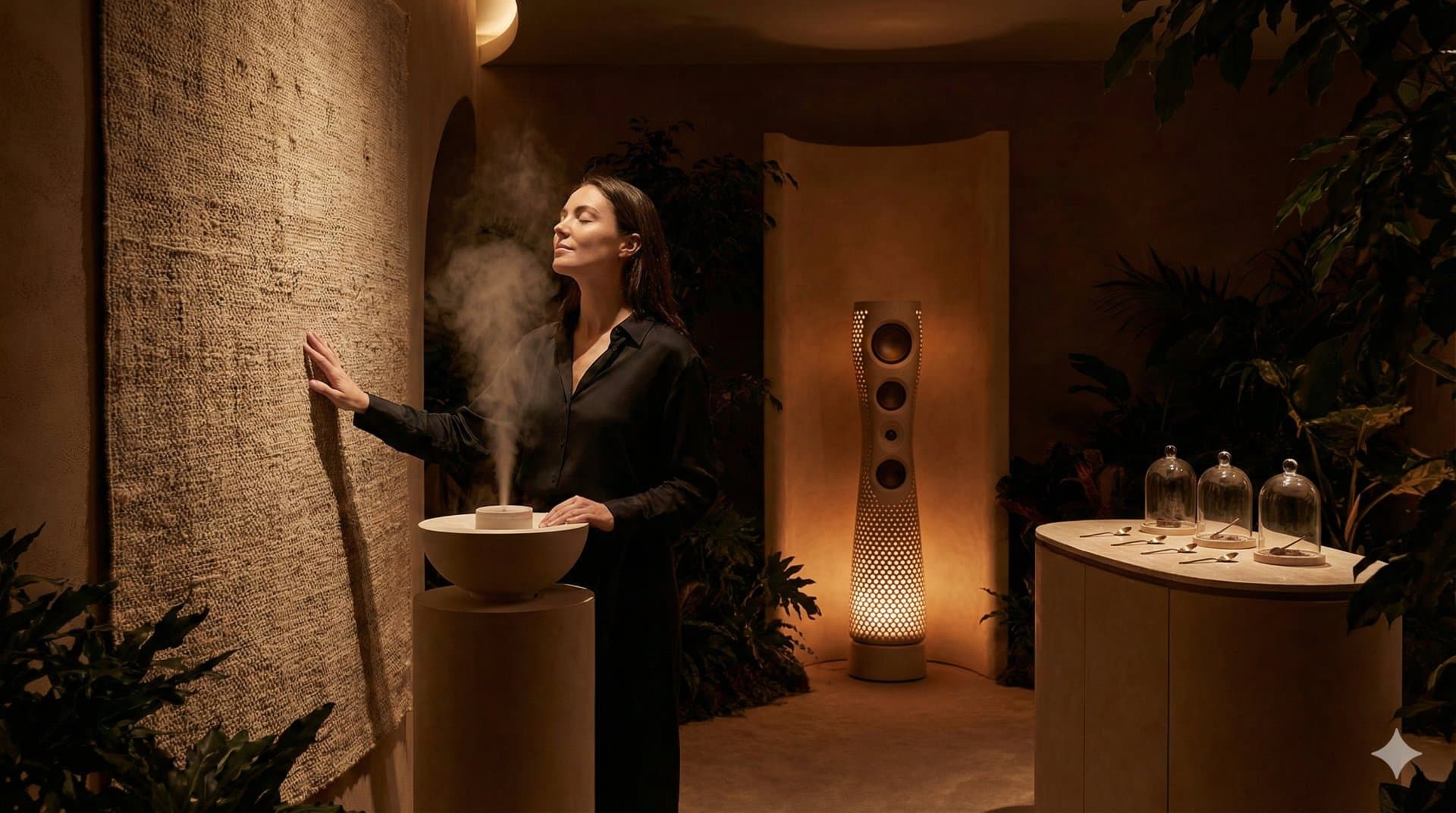
Most brand experiences focus on sight. But humans experience the world through five senses, and the most memorable experiences engage multiple senses simultaneously. Sensory design creates deeper emotional connections by addressing sight, sound, touch, smell, and taste.
The Power of Multisensory Experience
Why Multiple Senses Matter
Memory Enhancement: Multisensory experiences are remembered 10x better than single-sense experiences.
Emotional Depth: Each sense triggers different emotional pathways, creating richer responses.
Differentiation: While competitors focus on visual, you can own other sensory territories.
Authenticity: Real-world experiences are multisensory; designed experiences should be too.
The Sensory Hierarchy
Different senses have different strengths:
Smell: Strongest emotional trigger, most directly connected to memory Sound: Sets mood and atmosphere, processed continuously Touch: Creates intimacy and quality perception Sight: Dominant sense, easiest to design for Taste: Most intimate, limited applications
Designing for Each Sense
Visual Design
The Dominant Sense: 80% of sensory information comes through vision.
Visual Elements:
- Color (emotion, meaning, attention)
- Shape (personality, recognition)
- Movement (energy, attention, delight)
- Light (mood, focus, atmosphere)
Visual Best Practices:
- Consistent visual language
- Appropriate contrast and hierarchy
- Meaningful motion
- Quality imagery
Sound Design
The Atmosphere Setter: Sound shapes emotional atmosphere and brand personality.
Sound Elements:
- Music (mood, energy, culture)
- Ambient sound (environment, authenticity)
- Interface sounds (feedback, personality)
- Voice (human connection, guidance)
Sound Best Practices:
- Match sound to brand personality
- Consider context and volume
- Design for silence too
- Create distinctive audio signatures
Examples:
- Intel's iconic bong
- Netflix's ta-dum
- Apple's startup chime
- McDonald's "I'm lovin' it" jingle
Touch Design
The Intimacy Creator: Touch creates physical connection and quality perception.
Touch Elements:
- Texture (quality, personality)
- Weight (substantiality, value)
- Temperature (comfort, energy)
- Haptic feedback (confirmation, delight)
Touch Best Practices:
- Quality materials communicate value
- Texture creates personality
- Haptic feedback enhances digital
- Consider all touchpoints literally
Examples:
- Apple product packaging
- Luxury car interiors
- Hotel bedding quality
- Phone haptic feedback
Scent Design
The Memory Trigger: Scent is the most emotionally evocative sense.
Scent Elements:
- Ambient scent (environment, mood)
- Product scent (identity, experience)
- Signature scent (brand recognition)
Scent Best Practices:
- Subtle is better than strong
- Consistency builds recognition
- Consider cultural associations
- Test for allergies and sensitivities
Examples:
- Singapore Airlines' Stefan Floridian Waters
- Abercrombie & Fitch store scent
- Cinnabon bakery aroma
- New car smell (engineered)
Taste Design
The Intimate Connector: Taste is the most personal sense, limited but powerful.
Taste Elements:
- Food and beverage offerings
- Branded edibles
- Experiential tastings
Taste Best Practices:
- Quality over quantity
- Align with brand values
- Create shareable moments
- Consider dietary restrictions
Examples:
- Champagne at luxury events
- Branded mints and chocolates
- Coffee at car dealerships
- Samples at grocery stores
Multisensory Integration
Creating Sensory Harmony
Congruence: Senses should tell the same story. Mismatched sensory signals create confusion.
Example of Congruence: A luxury spa with:
- Soft, natural colors (sight)
- Gentle ambient music (sound)
- Plush robes and towels (touch)
- Calming essential oils (smell)
- Herbal tea (taste)
Example of Incongruence: A luxury spa with:
- Elegant decor (sight)
- Pop music (sound) ← Doesn't match
- Quality materials (touch)
- No scent strategy (smell) ← Missed opportunity
Sensory Signatures
Creating Recognition: Distinctive sensory combinations become brand signatures.
Elements of a Sensory Signature:
- Unique combination of sensory elements
- Consistent application across touchpoints
- Memorable and distinctive
- Aligned with brand values
Sensory Design by Context
Retail Environments
Opportunity: Full sensory control Key Senses: All five possible
Strategies:
- Store music that matches brand energy
- Signature scent throughout
- Product touch opportunities
- Visual merchandising
- Food/beverage offerings
Events and Activations
Opportunity: Immersive experiences Key Senses: All five possible
Strategies:
- Designed soundscapes
- Environmental scenting
- Interactive touch elements
- Branded food and drink
- Instagram-worthy visuals
Digital Experiences
Opportunity: Limited but growing Key Senses: Sight, sound, touch (haptic)
Strategies:
- Interface sounds and music
- Haptic feedback on mobile
- Visual richness and motion
- (Emerging: smell and taste devices)
Product Design
Opportunity: Unboxing and use Key Senses: Sight, touch, smell, sound
Strategies:
- Premium packaging materials
- Satisfying unboxing sounds
- Product scent (if appropriate)
- Quality tactile finishes
Measuring Sensory Impact
Research Methods
Sensory Surveys:
- Rate each sensory element
- Assess congruence
- Measure emotional response
Observation:
- Watch how people interact
- Note sensory exploration
- Identify engagement patterns
Biometrics:
- Physiological response to stimuli
- Emotional measurement
- Attention tracking
Key Metrics
Sensory Recall: Can people remember the sensory experience?
Emotional Attribution: Do they associate positive emotions with the brand?
Behavioral Impact: Does sensory design affect behavior (dwell time, purchase, return)?
Implementation Guide
Phase 1: Audit
- Map all customer touchpoints
- Identify current sensory elements
- Assess congruence and gaps
- Benchmark competitors
Phase 2: Strategy
- Define sensory brand identity
- Prioritize senses by context
- Design sensory signatures
- Create implementation guidelines
Phase 3: Implementation
- Start with highest-impact touchpoints
- Test with users
- Refine based on feedback
- Roll out systematically
Phase 4: Maintenance
- Monitor consistency
- Refresh periodically
- Measure ongoing impact
- Evolve with brand
Conclusion
Sensory design transforms ordinary experiences into memorable ones. By engaging multiple senses in harmony, brands create deeper emotional connections that sight alone cannot achieve.
The opportunity is significant: while most brands focus on visual design, those that master multisensory experience create distinctive, memorable, emotionally resonant brand experiences.
Start by auditing your current sensory footprint, identify the biggest opportunities, and begin designing for all five senses.
Related Articles

What Is Behavior Intelligence in Marketing?
Behavior Intelligence is the capability to measure behavior during brand experiences and translate it into defensible business insight. Learn what it is, how it works, and why it matters for experiential marketing.
 Miriam Arbus
The Complete Guide to Emotional Intelligence in Experiential Marketing
Discover how emotional intelligence transforms brand experiences. Learn the science behind measuring emotions and connecting them to business outcomes.
 Justin O'Heir
Unlock brand engagement with data-driven storytelling strategies
Discover how data-driven storytelling transforms brand narratives into immersive, personalized experiences that captivate audiences and drive real engagement.
Miriam ArbusInterested in implementing this for your brand?