
When Experiences Become Learning Systems
How can brand experiences get smarter over time? Learn how audience response can turn every activation into a learning system that informs better decisions and future experiences.
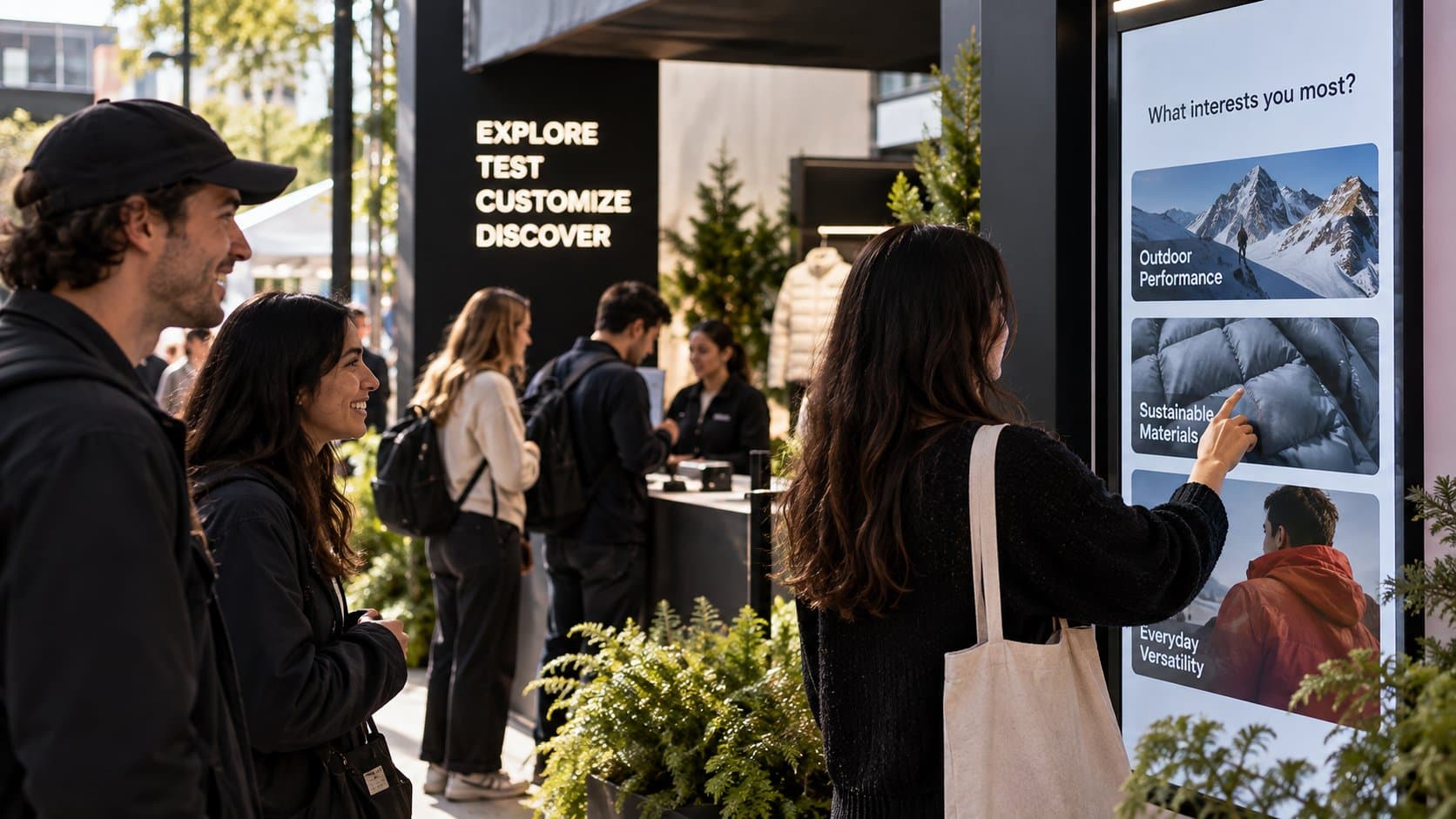
Every experience teaches us something.
People show us what catches their attention, what they want to explore, what they repeat, and what moves them to take the next step.
The opportunity for brands is to use that response.
When teams capture what happens inside an experience and carry those insights forward, each activation can inform the next. Experiential becomes a learning system.
The Audience Adds Information
Every activation begins with a plan.
A team defines the audience, builds a creative concept, maps the journey, and decides which moments matter most.
Then people enter the experience.
They make choices. They spend more time with certain interactions. They return to something they enjoyed. They ask questions. They find their own way through the journey.
Those decisions add information to the original strategy.
Imagine an activation built around three product features. The team expects one to drive the strongest response. Instead, people consistently spend more time exploring another.
That pattern gives the brand something useful: a clearer view of what people care about.
The same thing can happen at any scale. A game gets replayed more than expected. A supporting interaction becomes a major draw. One message consistently prompts people to explore further.
Each response can help sharpen the next decision.
Learn While the Experience Is Happening
Most experiential learning happens after the event, when teams review results and prepare a report.
Experience data can become useful much earlier.
If participation drops at a particular point, teams can look at what is creating friction. If one interaction generates strong engagement, staff can direct more people toward it. If audiences respond strongly to a particular message, teams can give it more prominence.
This creates a simple feedback loop:
Create → Observe → Learn → Adapt
The experience generates information while people move through it. Teams interpret that response and use it to make better decisions.
Over time, the loop gets stronger.
Let Each Activation Inform the Next
The larger opportunity comes from connecting experiences over time.
One activation might reveal that people respond strongly to competition. Another might show that collaborative interactions create deeper participation. A third might reveal that product discovery works best when people can explore at their own pace.
Together, those findings start to build a clearer picture of the audience.
Teams can use that intelligence when developing the next brief, choosing formats, allocating budgets, or deciding which ideas deserve further investment.
Instead of starting each activation from the same assumptions, the brand starts with what it has already learned.
Build a Learning System
This changes the role of measurement.
Measurement becomes part of how the experiential program develops.
Teams can ask:
What did people respond to?
What surprised us?
What should we repeat?
What should we change?
What do we want to test next?
Each activation answers some questions and creates new ones.
As those insights accumulate, brands can identify patterns across audiences, formats, campaigns, and markets. Glimmers from individual experiences begin contributing to a broader understanding of what consistently creates attention, curiosity, participation, and intent.
That is where experiential intelligence compounds.
Make the Next Experience Smarter
A single activation can create a memorable moment.
A connected experiential program can create knowledge.
When brands treat audience response as something they can learn from, the value of an experience extends beyond the event itself. What happens today can shape the creative decisions, investments, and experiences that follow.
The goal is simple:
Create an experience. Learn from how people respond. Carry that intelligence forward.
Then do it again.
That is when experiences become learning systems.
Related Articles
![Featured image for Do Your Events Actually Work [Podcast With Justin O'Heir]](/_next/image?url=https%3A%2F%2Fbanmfdzjkzlkhakecmfm.supabase.co%2Fstorage%2Fv1%2Fobject%2Fpublic%2Fcontent%2Farticles%2FEther_do-your-events-actually-work-podcast-with-justin-o_2026-07-24_16-21-58.jpg&w=2048&q=75)
Do Your Events Actually Work [Podcast With Justin O'Heir]
Founder of Ether hopped on with The Connector's Table Podcast to chat about how Ether measures offline experiences.
 Justin O'Heir
Interactive Experiences: Boost Brand Engagement
Discover how Chipotle’s innovative use of temporary tattoos creates playful, shareable moments that deepen brand engagement and resonate with Millennial and Gen Z audiences. Learn why ephemeral experiences are the future of authentic marketing.
Justin O'Heir
Emotional Triggers That Drive Purchase Decisions
Understand the emotional triggers that influence buying behavior. Learn how to ethically leverage psychological principles to create more compelling brand experiences.
 Miriam Arbus
Interested in implementing this for your brand?